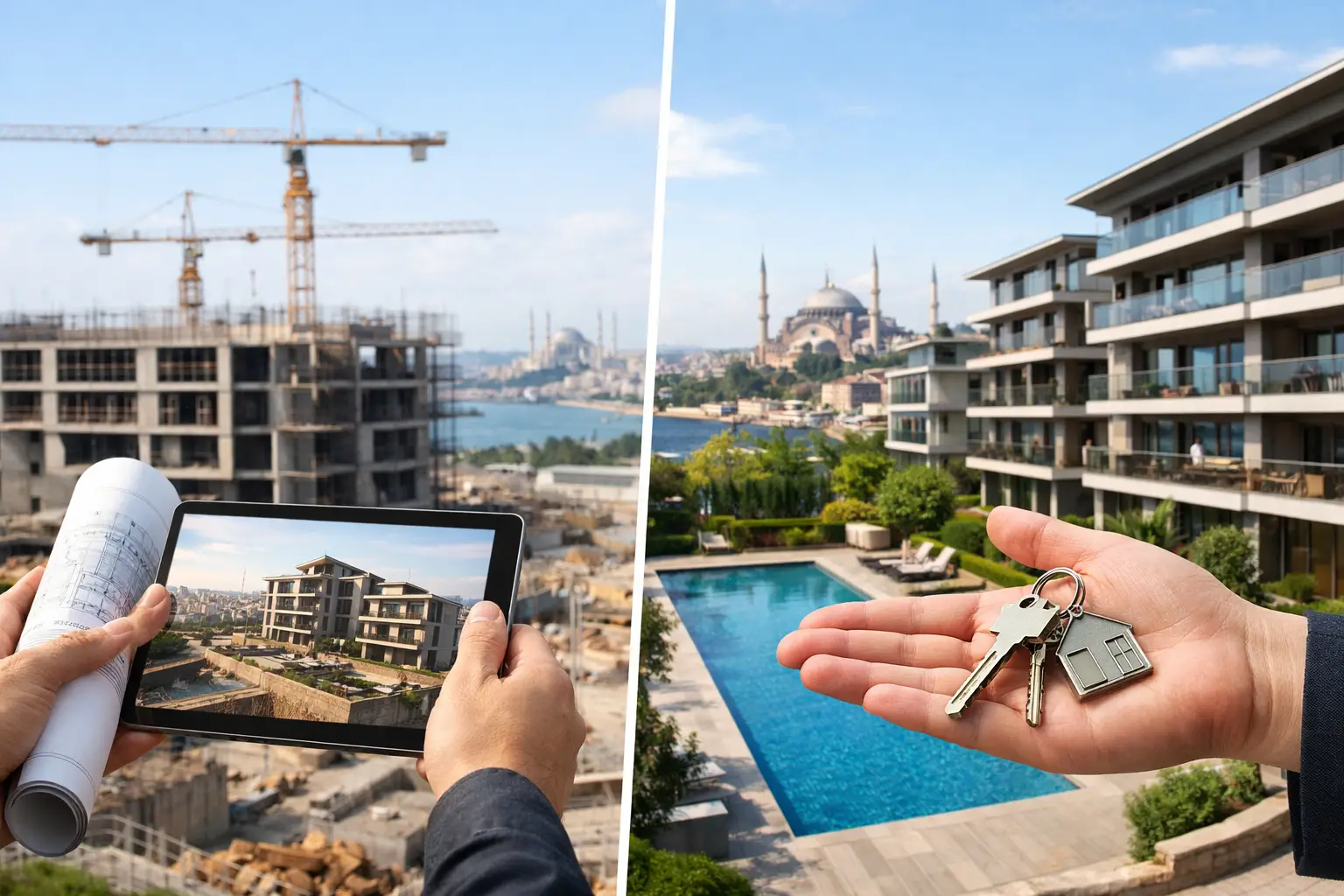
Istanbul is no longer a market where international buyers can rely on broad assumptions or headline prices alone. The future of Turkey property investment will favor purchasers who understand location, property quality, legal eligibility, and the purpose behind their acquisition. For some, that purpose is a residence with Bosphorus access and city convenience. For others, it is rental income, capital preservation, a family base, or a qualifying route toward Turkish citizenship.
Turkey continues to offer a compelling combination of metropolitan scale, lifestyle appeal, and investment accessibility. Yet the strongest opportunities will not be found by simply choosing the lowest price per square meter. They will come from selecting the right asset in the right district, with a clear exit strategy and reliable support throughout the transaction.
Why Istanbul Will Continue to Lead Demand
Istanbul remains the center of gravity for overseas property buyers in Turkey. It is a global city of more than 15 million people, a commercial gateway between Europe and Asia, and a place where residential demand is supported by business activity, universities, tourism, transport investment, and long-term population needs.
That depth matters. A property market driven only by holiday demand can be vulnerable when travel patterns change. Istanbul has several layers of demand: local professionals, families upgrading their homes, corporate tenants, students, expatriates, visitors, and investors. This gives well-positioned properties a broader tenant and resale audience than many purely seasonal destinations.
The city is also becoming more defined by connected micro-markets. Buyers are increasingly assessing districts by commute time, access to metro lines, proximity to business centers, schools, hospitals, waterfront areas, and new urban developments. A modern residence near a major transport connection in Basaksehir, Kagithane, or the Asian side may suit a different investment objective than a luxury villa in Beykoz or a central apartment in Sisli.
The practical implication is simple: Istanbul should not be treated as one market. Each district has its own price behavior, tenant profile, supply pipeline, and lifestyle proposition.
The Future of Turkey Property Investment Is Selective
The next phase of the market is likely to reward quality and selectivity. Buyers will pay closer attention to construction standards, title deed status, developer reputation, earthquake compliance, amenities, and the long-term management of a project. New-build residences with professional security, parking, social facilities, and efficient layouts can attract stronger demand, but only when their location and pricing remain realistic.
At the same time, resale property will remain highly relevant. A well-maintained resale apartment in an established neighborhood may offer immediate occupancy, a mature local environment, and clearer rental comparables. It can also provide access to districts where new development is limited. The trade-off is that a resale purchase requires careful inspection of the building, ownership records, occupancy status, maintenance obligations, and potential renovation costs.
Land and villa investments can offer a different type of opportunity, especially for buyers seeking privacy, space, nature-driven living, or long-term development potential. These assets are less standardized than city apartments. Zoning, infrastructure, access, and permitted use become central to the decision, so specialist due diligence is essential.
Quality Will Matter More Than Size
Many international buyers begin with a simple question: how many square feet can my budget buy? A better question is whether the property will remain desirable five or ten years from now.
A smaller apartment in a connected, well-managed project can be more liquid than a larger unit in a remote location with excess supply. For lifestyle buyers, a home near daily services and transport often provides greater convenience than a larger home requiring long travel times. For investors, liquidity is not an abstract concept. It affects the ability to rent, refinance where available, or sell when priorities change.
Currency, Pricing, and the Need for a Clear Plan
Currency movements are part of the Turkey investment conversation, particularly for buyers funding a purchase in U.S. dollars, euros, pounds, or Gulf currencies. A favorable exchange rate can improve entry value, while local price growth and inflation can make headline comparisons difficult. A property that appears inexpensive in foreign currency terms is not automatically a strong investment if the building, district, or resale demand is weak.
International buyers should separate three questions. First, what is the price of the asset in the purchase currency? Second, what income can it realistically generate after operating costs? Third, who is the likely buyer or tenant in the future? This approach is more useful than trying to predict every movement in exchange rates.
Rental yields also depend on the type of property and the rental model. Long-term rentals often provide a more stable arrangement for owners who want consistency and less turnover. Short-term rental strategies may produce attractive gross figures in suitable locations, but they require compliance with current licensing rules, active management, seasonal planning, and higher operating costs. Regulations can change, so buyers should confirm the permitted rental use of a specific property before making income projections.
Citizenship Will Remain a Strategic Consideration
For many overseas purchasers, Turkish citizenship by investment is not an added bonus. It is a primary reason to enter the market. A qualifying real estate purchase can connect property ownership with a longer-term family and mobility strategy, provided the transaction meets the applicable legal requirements.
This route demands precision. The qualifying value, appraisal process, payment trail, title deed details, holding commitment, and application documentation must be handled correctly. Not every property, payment structure, or resale transaction will be suitable for a citizenship application. Buyers should never assume that a developer advertisement or informal assurance is enough.
The opportunity is strongest for buyers who genuinely value both sides of the purchase: a property they would be comfortable owning on its own merits, plus the potential citizenship outcome. That mindset protects the buyer if personal plans, market conditions, or program requirements evolve.
Choose the Asset Before the Incentive
Citizenship can shape the budget and transaction structure, but it should not replace property analysis. A family planning to relocate may prioritize schools, healthcare access, green space, and a practical commute. An investor focused on rental demand may prefer a compact city residence near transport and employment centers. A second-home buyer may place greater value on views, coastal access, and a quieter setting.
The best acquisition aligns the investment route with the buyer’s actual life plan. It is this alignment that turns a transaction into a durable asset decision.
New Infrastructure Will Influence Value, but Not Equally
Transport expansion, urban regeneration, business districts, and large-scale mixed-use developments will continue to shape demand across Istanbul. Metro access is especially influential because it changes how residents experience distance in a city of this scale. A district that feels peripheral by road can become considerably more appealing when connected to major employment and lifestyle hubs by rail.
However, infrastructure news alone is not a reason to buy. Markets often price expectations in early, and some projects are marketed heavily before the surrounding neighborhood is fully established. Buyers should examine what exists today, what is formally planned, the expected delivery horizon, and how much competing supply is scheduled nearby.
Projects close to financial centers, hospitals, universities, airports, and established transport links may offer a more balanced demand profile. Emerging locations can still be attractive, particularly for buyers with a longer holding period, but they should be priced with patience in mind rather than immediate liquidity.
A Safer Purchase Process Creates Better Outcomes
The future market will be more transparent for buyers who work through a structured process. The most successful international transactions begin with a detailed brief rather than a list of random listings. Budget, intended use, preferred districts, citizenship eligibility, timing, financing source, and expected holding period should be clear before viewings begin.
Once suitable options are identified, the focus should move to verification. This includes reviewing the title deed, checking the legal status of the property, confirming any encumbrances, understanding taxes and recurring fees, examining construction and delivery terms for off-plan purchases, and ensuring that payment records are properly documented. A buyer also needs a realistic view of furnishing, management, insurance, and post-purchase responsibilities.
This is where a full-service adviser adds value beyond property discovery. Hayat helps international buyers compare opportunities across Istanbul, coordinate the purchase journey, and move from first inquiry to contract signing with clear, practical guidance. For citizenship-focused clients, the property and documentation process must be coordinated from the start rather than corrected later.
What Smart Buyers Should Watch Next
The most attractive opportunities will likely sit where real utility meets disciplined pricing: homes people want to live in, properties tenants can afford to rent, and assets with a credible resale audience. Buyers should watch supply levels in their preferred district, changes to rental and citizenship rules, infrastructure delivery, developer performance, and the wider economic conditions affecting buyer confidence.
There is no single best property type for every investor. A luxury residence may be ideal for a buyer seeking lifestyle and international-standard amenities, while an established resale apartment can better suit a value-focused investor. A villa may offer exceptional family living but require a longer sales horizon. The right choice depends on the role the property needs to play in your portfolio and your life.
The opportunity in Turkey is not disappearing. It is becoming more sophisticated. Begin with your objective, assess each property beyond its brochure, and make sure every legal, financial, and practical detail supports the future you want the investment to serve.