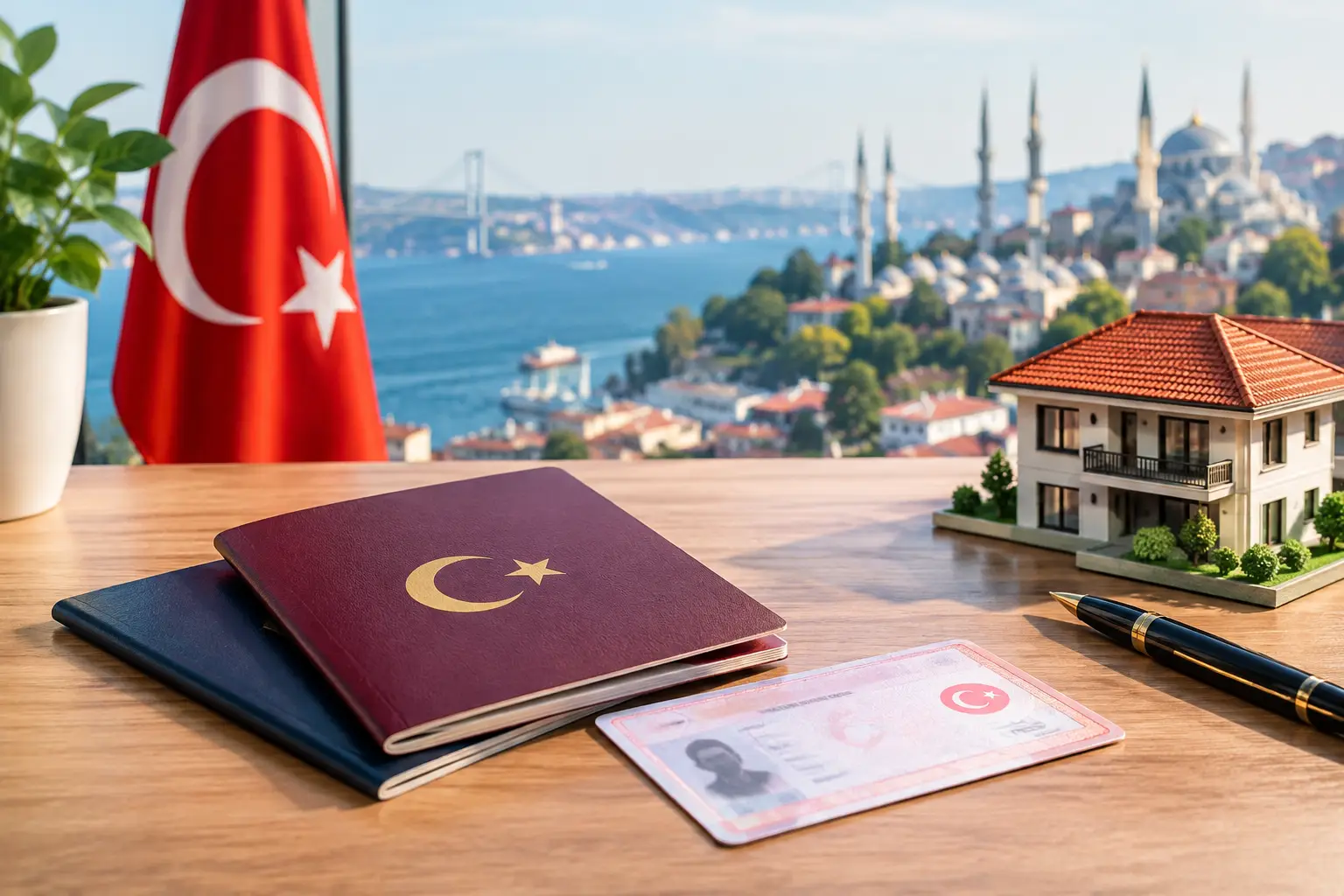

A well-chosen home in Istanbul can be more than a place to live, visit, or rent. For eligible international buyers, Turkish citizenship through property investment creates a direct connection between a tangible asset and a long-term family strategy. The appeal is clear: ownership in a dynamic market, access to a country that bridges Europe and Asia, and the opportunity to pursue a Turkish passport through a qualifying purchase.
But this is not a decision to make based on a headline investment figure alone. The right property, payment structure, paperwork, and timing all matter. Buyers who approach the process with clear legal and commercial guidance are better positioned to protect their capital while building the lifestyle and mobility plans they want.
What Turkish Citizenship by Investment Means
Turkey offers several investment routes to citizenship, but real estate is the route most closely aligned with the goals of international property buyers. Under the real estate option, an applicant must purchase qualifying property or properties with a total value of at least $400,000 and agree not to sell the asset for three years.
The investment must meet the applicable legal conditions at the time of application. This typically includes an official valuation report, a clean and eligible title deed, documented payment transfers through the banking system, and a restriction recorded on the title deed confirming the three-year holding commitment.
The program is attractive because it lets investors select from a wide variety of property types. A buyer may prefer a central Istanbul residence with rental potential, a family villa with outdoor space, a branded apartment near business districts, or a portfolio of suitable units that together meet the threshold. The best choice depends on whether the priority is lifestyle, income, capital preservation, or a combination of all three.
The Property Must Be Chosen for More Than Its Price
A property priced at or above $400,000 is not automatically suitable for a citizenship application. Eligibility depends on documentation, transaction history, valuation, seller status, and compliance with the rules in force when the purchase is completed.
For example, the official valuation needs to support the required investment amount. The payments must be traceable, correctly transferred, and reflected in the transaction records. The title deed must be appropriate for foreign ownership and free from issues that could delay registration or affect the citizenship file. A low advertised price may look attractive, but it can become costly if the property does not meet the administrative requirements of the program.
This is why buyers should assess two questions at the same time: Is this an appealing real estate investment? And is it structured correctly for citizenship? Those are related questions, but they are not identical.
In Istanbul, district selection has a major impact on the answer. Buyers seeking strong daily livability may focus on areas with schools, retail, transport, and waterfront access. Investors may give greater weight to rental demand, infrastructure development, business activity, and the supply of comparable new projects. A second-home buyer may value nature, sea views, or private amenities more highly than immediate rental yield.
A qualified advisor can help compare these trade-offs before funds are committed, rather than after title transfer.
Who Can Be Included in the Application?
The principal investor can generally include a spouse and dependent children under the age of 18 in the citizenship application. This makes the real estate route particularly relevant for families planning a move, a second home, or a long-term international base.
Citizenship should not be confused with a short-term visit or a property ownership document. It is a legal status with broader implications, so applicants should consider the family’s future needs before selecting an investment. Schooling plans, business ownership, residence preferences, tax position, and the possibility of holding another nationality all deserve early attention.
Turkey permits dual citizenship in many cases, but an applicant’s current country of nationality may have its own rules. Professional advice in the applicant’s home jurisdiction is sensible where tax, reporting, or nationality issues may apply.
The Typical Turkish Citizenship Process
The process is structured, but it requires careful coordination. Once a suitable property has been identified, the buyer completes due diligence, receives the required valuation, and prepares payment records before moving to title transfer. The title deed is then registered with the required annotation preventing sale for three years.
After the investment conditions have been met, the relevant authority issues a certificate of eligibility. The investor can then proceed with the residence permit step required for the application process and submit the citizenship file with supporting family documents, translations, and other official paperwork.
The sequence may sound straightforward, yet small documentation errors can create avoidable delays. Names must match across passports, bank documents, title records, and translated certificates. Payment descriptions need to be handled correctly. Documents issued abroad may require notarization, apostille certification, or consular legalization, depending on the country where they were issued.
Processing times vary. Buyers should be cautious about anyone promising an exact approval date, because administrative workloads and individual file issues can affect the timeline. A well-prepared application is the practical way to reduce uncertainty, but no advisor should present citizenship approval as automatic.
Why Istanbul Remains a Strategic Choice
Not every qualifying property has to be in Istanbul, but the city remains the first choice for many international buyers. It combines a large residential market with business districts, universities, hospitals, cultural life, and transport connections that support both ownership and everyday use.
For investors, Istanbul offers depth. There are luxury residences in prime central neighborhoods, family-oriented communities on the city’s expanding edges, commercial spaces in established business areas, and resale homes that may offer immediate occupancy. This variety gives buyers room to match the citizenship requirement with a real investment thesis rather than purchasing simply to satisfy a threshold.
New developments can be appealing for modern amenities, payment plans, and professional property management. Resale properties may offer established neighborhoods, completed infrastructure, and a clearer view of current rental conditions. Neither is inherently better. The right route depends on budget, intended holding period, rental strategy, and how soon the buyer wants to use the property.
Protecting the Investment After Citizenship
The three-year no-sale requirement is a central feature of the program, but a thoughtful buyer should usually plan beyond that date. Real estate performs differently across districts and property categories. A home that suits a family today may not be the strongest rental asset tomorrow, while a high-yield unit may not provide the lifestyle experience a buyer imagined.
Before purchase, consider management as well as acquisition. Who will oversee utilities, tenant communication, maintenance, insurance, and future resale? Is the project professionally managed? Are service charges proportionate to the quality of amenities? Is there sufficient demand from local and international tenants? These questions matter whether the property is used as a residence, a vacation home, or an income-producing asset.
Buyers should also retain every transaction document in an organized file. The title deed, valuation report, payment receipts, tax records, insurance policies, and citizenship-related paperwork can all be relevant later for ownership management or resale planning.
A More Confident Route to Turkish Citizenship
The most successful citizenship purchases begin with a wider view than the minimum investment amount. They balance legal eligibility with location, quality, family needs, and a realistic plan for holding the property. This is where local market knowledge becomes valuable: a buyer needs to know not only what can qualify, but what is worth owning.
Hayat supports international buyers from property selection through contract, title deed, and post-sale coordination, helping align a qualifying investment with the standards expected from an Istanbul property purchase. The strongest next step is to define what the property should achieve for your family first, then build the citizenship route around an asset you will be glad to own long after the application is complete.