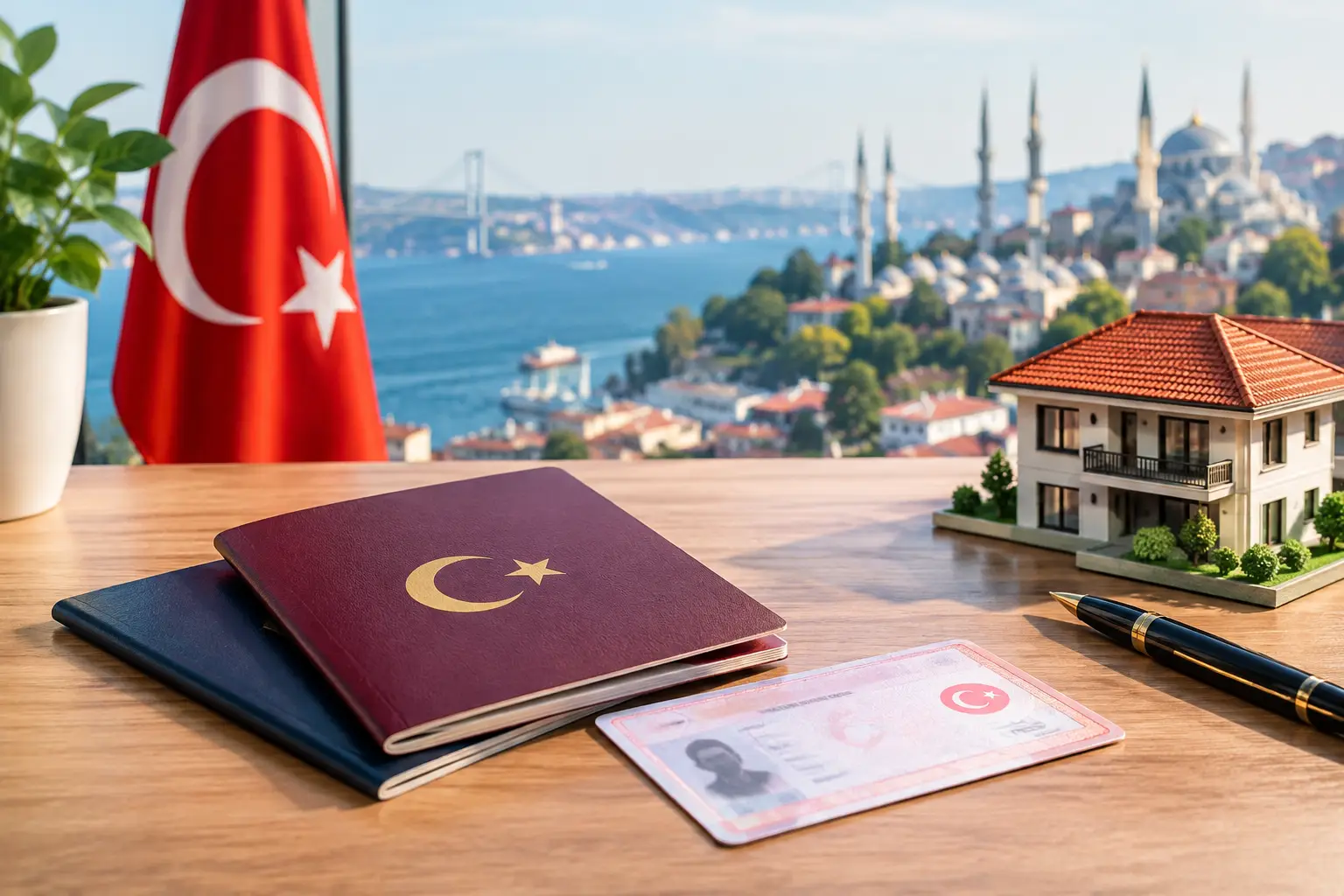
A Turkish bank account is often the practical bridge between choosing an Istanbul property and completing the transaction with confidence. So, can foreigners open Turkish accounts? In most cases, yes. Foreign nationals can open accounts with Turkish banks, including nonresidents, although each bank applies its own compliance checks, document standards, and country-specific policies.
For international buyers, the account is more than an administrative detail. It can help organize property payments, title deed costs, utility bills, rental income, maintenance fees, and the financial records needed for a well-managed investment. The right preparation can make this stage far more straightforward, whether you are purchasing a luxury residence in central Istanbul, a family villa, or an income-producing commercial property.
Can Foreigners Open Turkish Accounts Without Residency?
Many foreigners open a Turkish bank account without holding a residence permit. Turkish citizenship is not required either. However, nonresidents should expect a more detailed review than Turkish citizens or residents, particularly where the bank needs to verify identity, tax status, source of funds, and the purpose of the account.
This is where expectations matter. There is no single rule that guarantees approval at every branch. A bank may welcome a nonresident buyer with a complete property file, while another may ask for additional evidence or limit the services available until the customer receives residency. Policies can also differ by nationality, currency, branch location, and the bank’s internal risk procedures.
For a buyer entering the market through a real estate purchase, having a clear transaction story is helpful. A passport, tax number, sale agreement or reservation documents, and evidence of funds create a credible picture of why the account is needed. Buyers pursuing Turkish citizenship by investment should be especially careful to preserve a clean, traceable payment path from their own account to the seller.
Why Property Buyers Benefit From a Turkish Account
It is possible to pay certain property-related costs from abroad, but an account in Turkey usually gives buyers greater day-to-day control. It allows funds to be held in Turkish lira, U.S. dollars, euros, or other currencies offered by the bank. This flexibility matters when exchange rates move and when payment dates are fixed in a purchase contract.
A local account can also simplify recurring obligations after closing. Monthly site management fees, insurance, utility accounts, municipal charges, furnishing expenses, and rental income are easier to monitor when they pass through one dedicated account. For investors with more than one property, this separation creates cleaner records for personal planning and future resale due diligence.
There are trade-offs. Banks may charge account maintenance, transfer, card, or currency-conversion fees. Digital banking access can vary for nonresidents, and a local mobile number may be required for security codes. Before signing account forms, ask which currencies can be held, whether international transfers are supported, how exchange rates are set, and whether online access works while you are outside Turkey.
Documents Usually Requested by Turkish Banks
Requirements are not identical across banks, but a foreign buyer should normally arrive prepared with the following:
- A valid passport, plus a notarized Turkish translation if the bank requests one.
- A Turkish tax identification number.
- Proof of address, often from the buyer’s country of residence.
- A Turkish mobile number, depending on the bank and the services requested.
- Documents showing the reason for opening the account, such as a property reservation, sales contract, title deed information, or investment file.
- Source-of-funds evidence, which may include recent bank statements, salary records, company documents, or proof of asset sale.
The tax number is particularly significant. It identifies foreign nationals for many financial and property procedures in Turkey and is generally obtained before or during the banking process. Requirements and application methods can change, so it is wise to confirm the current procedure before your appointment.
Bring original documents whenever possible. If your proof of address or financial documents are not in Turkish or English, ask in advance whether certified translation, notarization, or apostille authentication will be needed. Preparing this early helps avoid a repeat visit when you are working within a short inspection or closing schedule.
Opening the Account: What the Process Looks Like
For many foreign buyers, account opening is completed at a branch rather than entirely online. The bank officer will review the documents, collect signature forms, carry out compliance checks, and establish the account types you need. A basic package may include a Turkish lira account and one or more foreign-currency accounts.
Timing depends on the bank and the quality of the file. A simple application with complete documents may move quickly, but enhanced checks can take longer. Buyers should avoid scheduling a property payment on the assumption that a new account will be fully active the same day. Allow a reasonable buffer between the account appointment, the arrival of funds, currency exchange, and contract deadlines.
If you plan to send money from the United States or another country, ask for exact beneficiary details and confirm the transfer reference the bank expects. International wires can be delayed by intermediary banks, public holidays, compliance screening, or incomplete sender information. A small test transfer may be useful before sending a substantial amount, provided it does not interfere with the agreed payment schedule.
Protecting the Payment Trail for Property and Citizenship
A transparent payment record is essential in any cross-border purchase. It is even more important when a buyer intends to apply for Turkish citizenship through a qualifying real estate investment. The purchase must meet the applicable legal requirements at the time of application, and the funds must be documented correctly.
The payment route, currency exchange records, bank receipts, seller information, and title deed documentation should align. Do not rely on informal cash arrangements, third-party payments, or unclear descriptions of transfers. Those shortcuts can create unnecessary questions during title deed registration, bank compliance reviews, resale, tax planning, or a citizenship application.
A professional advisor can coordinate the property side of the transaction with the practical banking timeline. At Hayat, this means helping buyers understand the sequence from selecting a suitable property through contract execution, payment preparation, title deed procedures, and post-sale planning. The goal is not simply to open an account, but to ensure it supports the investment strategy behind the purchase.
Common Reasons an Application Takes Longer
Delays do not necessarily mean a buyer is ineligible. Banks must meet anti-money-laundering and customer-identification obligations, and international clients may require additional review. A mismatch between the passport name and bank statement, an outdated proof of address, missing source-of-funds documents, or an unclear purpose for the account can all slow the process.
Nationality can also affect the paperwork requested. Some applicants face enhanced screening because of international sanctions rules, local banking policies, or the compliance requirements of correspondent banks. Buyers should treat this as a documentation issue to solve early, not as a last-minute task after a property has been reserved.
It is also worth separating personal and corporate needs. An individual purchasing a home generally opens a personal account. A buyer acquiring offices, shops, land, or hotel apartments through a company may need a corporate banking structure, company registration documents, authorized signatory records, and more extensive compliance review. The best route depends on ownership goals, tax advice, and the nature of the asset.
A Better Way to Prepare Before You Travel
Before arriving in Istanbul, gather recent proof of address, bank statements that clearly show available funds, and documents explaining the origin of those funds. Check that your passport has sufficient validity. If you are purchasing with a spouse, family member, or business partner, decide in advance who will be named on the account and on the title deed.
Arrange your property viewings and banking appointment around the same visit when possible, but leave room for administrative changes. A curated shortlist of properties, a clear budget, and a realistic payment plan give the bank and the transaction team the context they need to move efficiently.
A Turkish account should support your larger objective: owning a well-positioned asset, enjoying a more flexible Istanbul lifestyle, generating rental potential, or building a qualifying investment path. Start the process early, keep every payment documented, and let your banking setup serve the property decision rather than delay it.