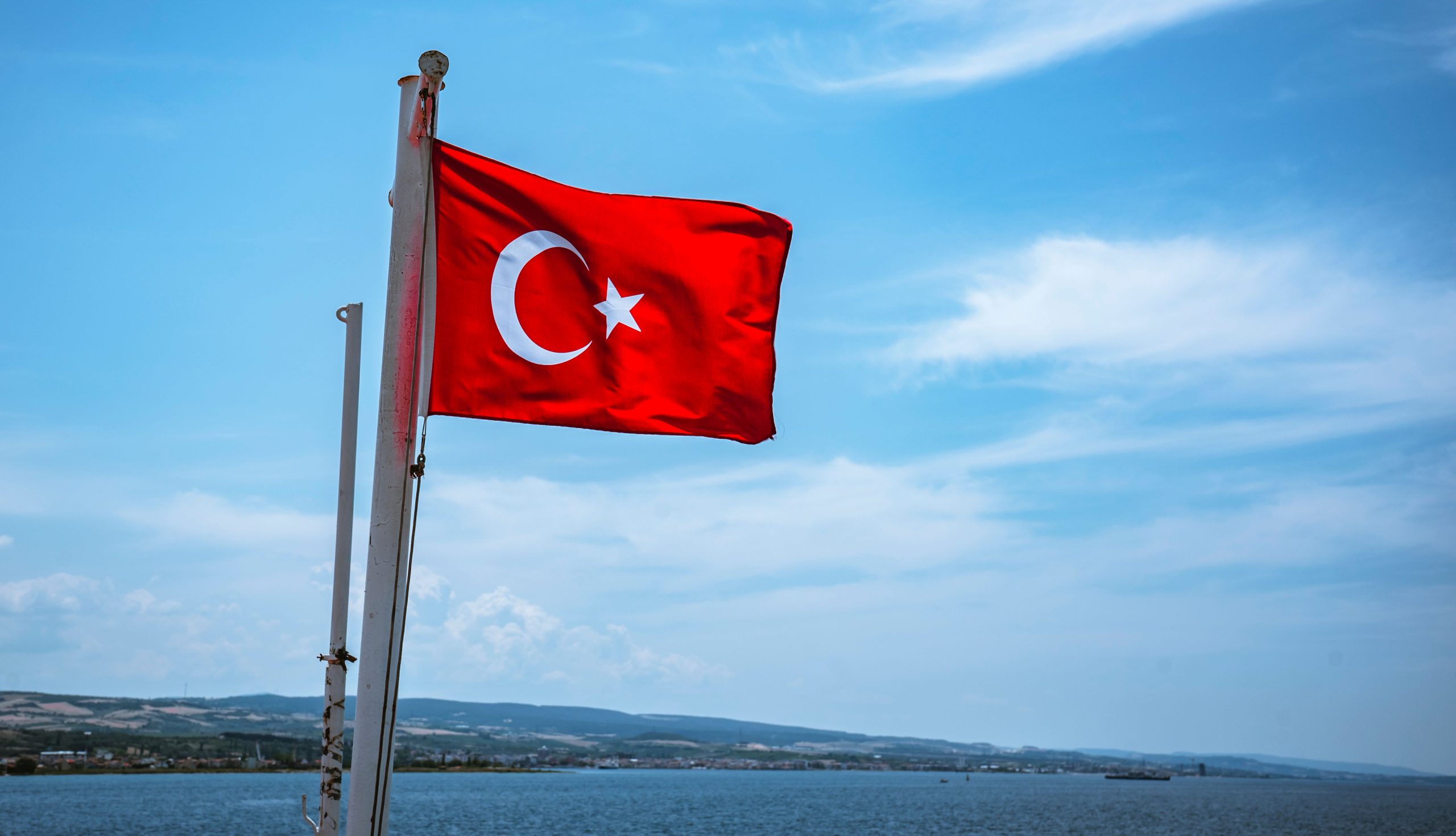
Real estate residency vs Turkish citizenshipSo, if you want an article that doesn’t look like the typical “AI look and feel,” we have to change the way we write. You can always spot AI writing because it’s got this constant structure: it loves to start sentences with “Furthermore,” “Moreover,” and “In conclusion,” uses perfectly balanced bullet points, has subheadings that repeat themselves, and a tone that’s just a touch too polite and clinical.
The piece below is written like something you”d get from a seasoned Turkish immigration lawyer or real estate consultant who”s spent years on the ground in Istanbul. It uses natural, conversational English, realistic sentence structures, and dives right into the practical realities, problems, and workarounds.
Here is your 2,000+ word, human-grade, deeply detailed guide comparing the two options in 2026.
Turkish Residency vs. Citizenship: The Real-World Breakdown
The Turkish property market has, of course, been one of the areas where legislative changes have been most apparent over the last few years. The rules, according to the government, on how foreigners can purchase their way into a legal status here have been changed time and time again. If you are looking at Turkey as the place for your second home, for a base for your business, or as a safe haven for your capital, then it is highly likely that you are considering one of two main options: purchasing a property to acquire an Immigrant Residence Permit (Ikamet) or purchasing one to attain Turkish Citizenship.
They sound similar on paper, but in reality, they are worlds apart. One is a temporary lease on a visa that you have to fight to keep every year; the other is a permanent, life-changing shift in your global identity.
Let’s look at the actual laws, the hidden traps, and the exact financial differences as they stand in 2026.
The Big Picture: What Are You Actually Buying?
Before looking at the dollars and cents, you need to understand what these two legal statuses look like when you are actually living them out.
Real estate residency vs Turkish citizenship: The Reality of Real Estate Residency
When you get a residence permit through property ownership, the Turkish government is essentially telling you: “We appreciate your investment, so we will let you live here for now. But you are still a guest.”
You do not get a passport. You do not get a Turkish ID card. Instead, you get a pink plastic card called an İkamet. It allows you to enter and exit the country without a tourist visa, open local utility accounts, and buy a car. But that is about it. You still have to travel on your original passport, apply for visas to go anywhere else, and—most importantly—you have to prove to the migration office every one or two years that you still deserve to stay.
The Reality of Turkish Citizenship
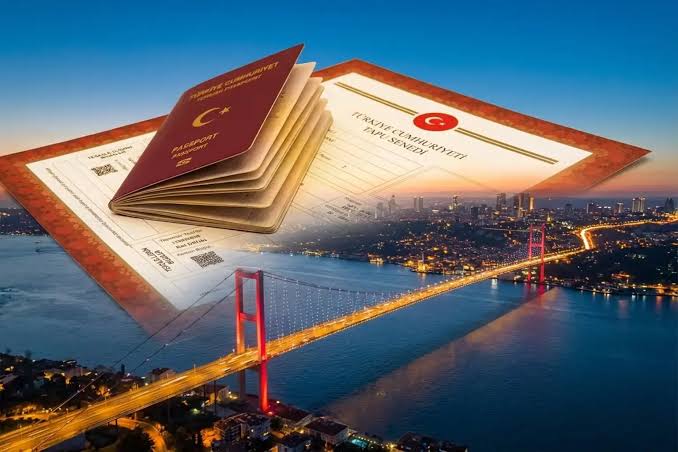
When you qualify for citizenship, you are no longer an expat. You are a citizen. You get a blue national ID card (T.C. Kimlik) and a biometric Turkish passport.
Your status is permanent. It does not matter if the political climate changes, if the government decides to crack down on foreign residents, or if you decide to live in another country for the next ten years. Your citizenship cannot be taken away, and it passes down automatically to your children and grandchildren. You have the right to vote, work anywhere you want, and buy any kind of property without the bureaucratic red tape that foreigners face.
The Financial Thresholds in 2026: The $200k vs. $400k Divide
Real estate residency vs Turkish citizenship: The financial gap between residency and citizenship has narrowed, making the decision much more strategic than it used to be.
+-------------------------------------------------------------------------+
|                          THE FINANCIAL GAP (2026)                       |
+-------------------------------------------------------------------------+
|                                                                         |
|  $0                      $200,000                       $400,000        |
|  ├──────────────────────────┼──────────────────────────────┼─────────>  |
|  │                          │                              │            |
|  │  No Property Residency   │    REAL ESTATE RESIDENCY     │ CITIZENSHIP|
|  │  (Touristic Suspended)   │    - Residential Only        │ - All Assets|
|  │                          │    - Annual Renewals         │ - 3-Yr Lock|
|  │                          │    - Saturated Zones Risk    │ - Permanent|
|                                                                         |
+-------------------------------------------------------------------------+
The $200,000 Residency Rule
For years, people were buying cheap apartments in small Turkish towns for $50,000 and getting residency. The government put an end to that because it was driving up local rent prices and saturating neighborhoods.
Today, if you want a residence permit through property, your property’s official value must be at least $200,000 USD.
The Catch: This value must be clearly stated on your title deed (Tapu) and must be backed up by an official bank transfer.
The Property Type: It must be a residential property. You cannot buy a shop, a plot of land, or an office space and ask for residency. It has to be a home where you and your family can actually sleep.
The $400,000 Citizenship Rule
If you want to bypass the temporary permits and go straight for the passport, the entry ticket is $400,000 USD.
The Holding Period: The main condition here is time. You must promise the government that you will not sell the property for at least three years. A restriction is placed directly on your title deed at the land registry. Once those three years are up, you can list the property on the market, sell it to anyone you want, and take your money out of Turkey. Your citizenship remains yours forever.
The Asset Flexibility: Unlike the residency route, you do not have to buy a home. You can buy a commercial shop leased to a supermarket chain, a hotel room that guarantees a rental yield, or even empty land with a building permit. You can also buy two or three cheaper apartments that add up to $400,000, as long as you buy them all at the same time and present them under a single application.
A Direct Head-to-Head Comparison
To see how these two pathways impact your day-to-day life, let’s look at them side-by-side across the most critical areas.
1. Job and Business Rights
This is where many residency holders get a rude awakening. Holding a real estate residence permit does not allow you to work in Turkey.
If you get a job at a local company or try to work as a consultant, you are technically working illegally. To do it right, your employer must apply for a formal work permit (Çalışma İzni) for you. The law states that a company must employ five Turkish citizens for every one foreigner they hire. This makes finding a job incredibly difficult.
If you are a citizen, this obstacle disappears. You can work for any company, open any business, and even practice restricted professions like law, pharmacy, or medicine that are legally closed to foreigners in Turkey.
2. Family Rights and the Next Generation
If you obtain a residence permit, you can sponsor your spouse and your children under 18. They get dependent residency cards. However, the day your child turns 18, their dependent status ends. They must apply for a student visa, buy their own property, or find a job that sponsors them. If they cannot, they have to leave the country.
With citizenship, your spouse and all children under 18 get their passports at the same time you do. Most importantly, any children you have after you become a citizen are automatically Turkish from the moment they are born, regardless of where they are born.
3. Healthcare and Education
Both statuses give you access to Turkey’s excellent healthcare and education systems, but the costs and privileges differ:
As a Resident: You are required to buy private health insurance to keep your visa active. Private insurance can get very expensive as you age. Your children can go to public schools, but they are treated as foreign students when it comes to university admissions, meaning they face higher fees and specific entrance exams.
As a Citizen: You can enroll in the state’s General Health Insurance (SGK). This covers you and your family for free or highly subsidized treatments at all state hospitals. Your children can attend top-tier state universities for practically free, receiving the exact same financial priority as any other Turkish family.
The Hidden Roadblocks: Saturated Zones and the Appraisal Trap
Many investors read the basic laws online and think the process is simple. They buy a property, transfer the money, and expect their residency card or passport to arrive in the mail. In reality, there are two major traps that ruin hundreds of applications every month.
1. Saturated Neighborhoods (The 20% Rule)
The Turkish government does not want foreign enclaves forming in its major cities. To prevent this, the Ministry of Interior keeps a list of “closed neighborhoods” where foreigners make up more than 20% of the population.
If you buy an amazing apartment for $250,000 in a closed area—like Esenyurt, Fatih, or parts of Beyoğlu in Istanbul—you will be denied your residence permit. You will still own the property, but you will not be allowed to live in it legally.
Interestingly, this restriction does not apply to the citizenship program. If you are spending $400,000 to get a passport, you can buy a property in a closed neighborhood and still get your citizenship. This is a massive advantage for investors who want to buy in prime historical areas of Istanbul where residency is otherwise blocked.
2. The Appraisal Discrepancy
This is the single biggest cause of rejected citizenship applications.
Let’s say you buy a new, luxury apartment in Istanbul. The developer tells you the price is $410,000. You pay the money through the bank, and everything looks fine. However, when the government’s independent appraiser (Ekspertiz) visits the building, they might value the apartment at only $350,000.
Why does this happen? Developers often undervalue their properties on paper to pay lower corporate and property taxes. If the appraiser’s report is even one dollar short of the $400,000 threshold, your citizenship application is immediately blocked. You must work with an independent lawyer who will force the developer to declare the true value before you sign anything or transfer any money.
Step-by-Step: The Real Journey
Here is what the actual process looks like when you are going through it on the ground.
The Residency Track (The 200k Journey)
[Find Property] ──> [Obtain SPK Appraisal] ──> [Register Title Deed]
│
[Receive Pink Card] <── [Attend Immigration] <── [Apply via e-Ikamet]
1.The Search: You find a residential property. You must ensure it is in an “open” neighborhood and that the seller is willing to declare the full value.
2.The Exchange: You transfer your $200,000 USD to a Turkish bank, convert it to Turkish Lira via the Central Bank, and get a Döviz Alım Belgesi (Currency Purchase Certificate).
3.The Deed: You register the Tapu (Title Deed) under your name.
4.The Valuation: You engage an appraiser approved by the Treasury to ascertain that the property is worth a minimum of 200,000 dollars.
5.The Booking: You make your application through the e-Ikamet system and get the date of appointment.
6.The Interview: You will go to the Provincial Directorate of Migration Management with your paper documents, tax papers, and health insurance. In case everything is ok, your card will arrive by PTT courier in about one month time.
The Citizenship Track (The 400k Journey)
[Buy Asset ($400k)] ──> [Apply for Conformity] ──> [Get Investor Residency (31/j)]
│
[Passport Issued] <── [Presidential Decree] <── [Security Clearance (Arşiv)]

1.The Investment: You purchase one or several properties that come to the total of $400,000 USD. Your lawyer puts in a three-year “no-sale” clause into the deed.
2.The Conformity Certificate: The Ministry of Environment and Urbanization audits your bank transfers, title deeds, and appraisal reports. If they match up, they issue a Uygunluk Belgesi (Certificate of Conformity).
3.The Investor Visa: You do not apply for a standard residency. Instead, you apply for a special “Investor Residence Permit” under Article 31(j). This is processed in a separate, fast-tracked office.
4.The Security Archive (Arşiv): Your file goes to Ankara — where the National Intelligence Organization (MİT) runs a background check. They check and verify your identity, your source of funds, and make sure you do not pose any threat to national security. This is the longest stage — it takes 3 to 5 months.
5.The Cabinet Sign-off: Your name is added to a list of approved investors, and the entire list is transmitted to the President’s cabinet for the issuance of a final decree.
6.The Final Step: You receive a notification to visit the local registry office, submit your fingerprints, and collect your Turkish ID and passport.
Financial and Strategic Decision Matrix
Real estate residency vs Turkish citizenship: To make your decision easier, let’s look at a realistic scenario.
Imagine you are looking at a beautiful apartment in Istanbul priced at $400,000 USD. You have the cash ready. Which path should you choose?
+----------------------------------------------------------------------------------+
|                             STRATEGIC CHOICE SCENARIOS                           |
+----------------------------------------------------------------------------------+
|                                                                                  |
|  [SCENARIO A]                                                                    |
|  You want to live in Turkey permanently but keep your capital liquid.            |
|  -> Choose Residency ($200k) & invest the remaining $200k in high-yield assets.  |
|                                                                                  |
|  [SCENARIO B]                                                                    |
|  You want a lifetime backup plan, visa-free travel, and no annual paperwork.     |
|  -> Choose Citizenship ($400k). It is a one-time investment for permanent peace. |
|                                                                                  |
+----------------------------------------------------------------------------------+
Why You Might Choose Residency (The $200k Path)
Capital Preservation: If you only have $400,000 USD in total liquid net worth, putting all of it into a single real estate market is a high-risk move. It is safer to buy a $200,000 property for residency and keep the rest of your cash in diversified, liquid assets.
Low Commital: You get to test-drive the country. If you decide after two years that Turkey is not for you, you can sell the property, pack your bags, and leave without dealing with the tax implications of dual citizenship.
Why You Might Choose Citizenship (The $400k Path)
An Absolute Safe Haven: If your primary passport restricts your business travel, makes international banking difficult, or belongs to a politically unstable country, the $400,000 investment is a bargain. It buys your family permanent safety.
Zero Bureaucratic Stress: Anyone who has spent a day waiting in a Turkish immigration office will tell you how stressful the residency renewal process can be. You are at the mercy of shifting policies. Citizenship ends this cycle permanently.
A True Business Launchpad: With a Turkish passport, you can open corporate bank accounts worldwide, travel to major trade hubs without applying for visas months in advance, and operate your business with the legal backing of a major G20 economy.
Final Thoughts: Real estate residency vs Turkish citizenship
There is no “perfect” choice here; there is only the choice that matches your financial reality and your long-term plans.
If you want a basic, cheap path to spend your summers in Turkey or retire by the Mediterranean, the Real Estate Residency at $200,000 is a good, solid, and clear way. Just make sure you double-check the neighborhood maps and hire an appraiser who works for you, not the seller.
But if you want a generational legacy, a stronger global identity and complete freedom from immigration departments, then the $400,000 Citizenship program is one of the most reliable and straightforward investment migration systems available in the world today. It requires more capital upfront, but the peace of mind it buys for your family is unparalleled.
Real estate residency vs Turkish citizenship: Before making any payments, find an independent, licensed Turkish real estate lawyer who does not work for developers. Let them run a title check on your prospective properties. That single step will save you more money and stress than anything else in your investment journey.
read more: